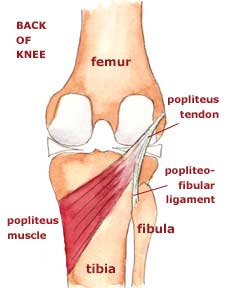
For over a year I was feeling this really bad pain on my knee that I could barely do my daily cores without having to ask for help. Going down the stairs was something almost impossible to accomplish. And having a 3 years old at home just made me feel more incapable. I've been to several doctores including orthopedists, physiatrists, chiropracters and nothing was working. Therefore, I decided to learn about the relationship of the knee and diet and hopefully come up with some answer to my pain. Then I decided to follow an anti-inflammatory diet and to take some detoxifying supplements such as carbonized bamboo. The pain got better but not a 100% better. So I decided to visit a Holistic Chiropractor who told me I needed more yellow and orange colors in my diet, and told me that a little lemon and olive oil in the morning would be good for me. So I told him: "What about the gall bladder cleanse? Should I try it?" He didn't know exactly how it'd work but thought it could be a good idea. I did it last Friday and on Saturday my knee was much, much better. So after surfing and researching in the net I found out about the great relationship between the gallbladder and the knee!
It sounds unlikely at first, but the gallbladder and the popliteus muscle are connected by the gallbladder acupuncture meridian. This connection has been scientifically confirmed by muscle testing using Applied Kinesiology, a form of chiropractic. When the gallbladder is under stress or not functioning properly, it causes the popliteus muscle to become "switched off", or neurologically inhibited. This means that the muscle does not fire properly and has only a fraction of its normal strength.
The resulting weakness has a devastating effect on the stability of the knee joint. Popliteus is a small muscle in the back of the knee that is involved in the "screw home" mechanism of the knee. This is the small amount of rotation (only 5 degrees) that occurs when we fully straighten our knee, which allows us to "lock" the joint. When popliteus isn't working properly it really destabilizes the whole knee joint.
This muscle weakness affects both knees, but it most commonly shows up as symptoms in one knee... usually the dominant one or the one that gets used the most. It can cause knee pain in all positions, but one of the most classic signs is knee pain that is worse walking downstairs than upstairs (or worse downhill than uphill). The pain is most often felt under the kneecap, even though the muscle responsible is at the back of the knee. Another sign of this problem is that often the muscle will be very tender if your press in behind the center of the knee.
So what causes the stress on the gallbladder which "switches off" the popliteus muscle?
Well, the function of the gallbladder is to store and concentrate the bile, which is then ejected into the intestines to help break down any fats that we have eaten. This means that if we are eating a fatty diet, the gallbladder has to work harder to perform its function.
This is the reason why someone's knee can feel "up and down", or better one day and then worse again the next. People are often confused by the fact that how their knee feels doesn't seem to relate to their level of activity....in fact it is more dependent on what they have eaten that day.
The gallbladder also has a role to play in detoxification, as all fat-soluble toxins in the body are broken down by the liver and excreted in the bile. This means that if the body is particularly toxic the gallbladder can again be placed under stress, causing the knee problem to show up again.
Unfortunately, a fatty diet and toxic environment is a very common combination of factors in our Western society....perhaps the reason why we are seeing more and more knee problems?
The gallbladder represents the yang (active portion) of the Wood Element in the Chinese Five Element Theory and helps us to make decisions: the catalyst of all action. It complements the liver, which represents the yin (passive) portion of the Wood Element and is involved in planning and adapting to life. When you have difficulty making decisions, either from a lack of information or from not wanting to make the wrong decision, the result is stress on the gallbladder. Stress on the gallbladder leads to feelings of resentment, the chief pathological emotion associated with the gallbladder. Other emotions associated with this organ are feeling galled, stubborn, emotionally repressed, depressed, or indecisive. These are important feelings to consider when evaluating why you might be experiencing symptoms related to the gallbladder.
Areas of the body governed by the gallbladder are the knee, lower neck, inter- vertebral disc, and the ileocecal valve, which is located between the small and large intestines. The gallbladder also governs hip joint function related to the femur and the acebatulum. The muscles associated with it are the popliteus, located behind the knee; the anterior deltoid in front of the shoulder; and the iliacus muscle located on the inside of the pelvis, controlling hip flexion. In conjunction with the liver, the gallbladder governs all the muscles, tendons, and ligaments of the body. It also plays a role in eye health. When a gallbladder experiences stress, a number of physical symptoms can result. The most common symptom is headaches, which can manifest as migraine, cluster, tension or sinus headaches. (The gallbladder meridian runs back and forth across both sides of the head.) Any time you have a headache, realize that gallbladder stress is involved, and, as a first step in evaluating the problem, ask yourself if there is any reason in your life for resentment or the other feelings described above. The second most common symptom of gallbladder stress is pain in the right rib border just below the chest. Gallbladder pain appears as a distinct ache after meals, especially if you've eaten rich, fatty foods. Nausea and perhaps even vomiting after eating, or within a few hours, which some may call food poisoning, is a sign that the gallbladder is irritated. If the offending food gets past the gallbladder, it will usually cause diarrhea. Because the quickest way out of the body is in the form of a liquid rather than a solid, the kidneys help the process along by instructing the body to purge the offending irritant, which then gets flushed out through the large intestine. Knee pain is the third most common symptom associated with gallbladder stress. As well as over the sides of the head, the gallbladder meridian passes through the center of the knee. If knee pain from gallbladder stress becomes chronic, it will result in arthritis. People who develop arthritis in their knees usually feel a lot of resentment, and have placed a lot of stress on their knees over time. Another reason for knee pain resulting in arthritis is the relationship of the gallbladder and the kidneys. As discussed in the January issue, the kidneys are related to the knees, and the chief emotion associated with the kidneys is fear. Accordingly, people who have difficulty making decisions because they fear the results will develop knee problems.

Oi Bela!! Adorei o texto. Vc precisa fazer pelo menos um level no Kushi, vai amar!!!!
ReplyDeleteConhece um livro chamado Healing Ourselves, de Naboru Muramoto?? Se não, pode comprar, vai adorar. É bem didático e aborda de uma forma super simples os cinco elementos...
Outro livro que eu amo é o The Book of Oriental Diagnosis do Michio Kushi, conhece?
Beijos!
Oi Camila, não conheço esses livros, vou procurar pra comprar. Obrigada pelas dicas. A Flor me fala a mesma coisa sobre os cursos do Kushi, de repente ano que vem qdo me formar passo um tempinho lá! Nos vemos em breve né?? bjsss
ReplyDeleteThis comment has been removed by the author.
ReplyDeleteThank you Heather. Happy & Healthy New Year!!!
ReplyDeleteThis comment has been removed by the author.
ReplyDelete